Sep. 23, 2026
The RF admittance level switch is a widely used point-type level detection device in industrial automation. It is designed for limit monitoring and alarm of solids, powders, liquids and slurries. It can realize high-level overflow prevention, low-level dry-run protection and automatic start-stop control for conveying equipment and pumps.
Built on RF admittance technology, this contact level sensor works well under complicated industrial conditions. It reduces detection errors caused by material coating, adhesion and fluctuations of temperature and humidity. It is applied in chemical, building material, grain, power and metallurgy industries for storage silos and fluid conveying systems.
Core feature: It is a contact point level detector. It only judges the presence or absence of medium at the measuring point instead of continuous level measurement. It features stable performance, good anti-interference property and low calibration frequency.
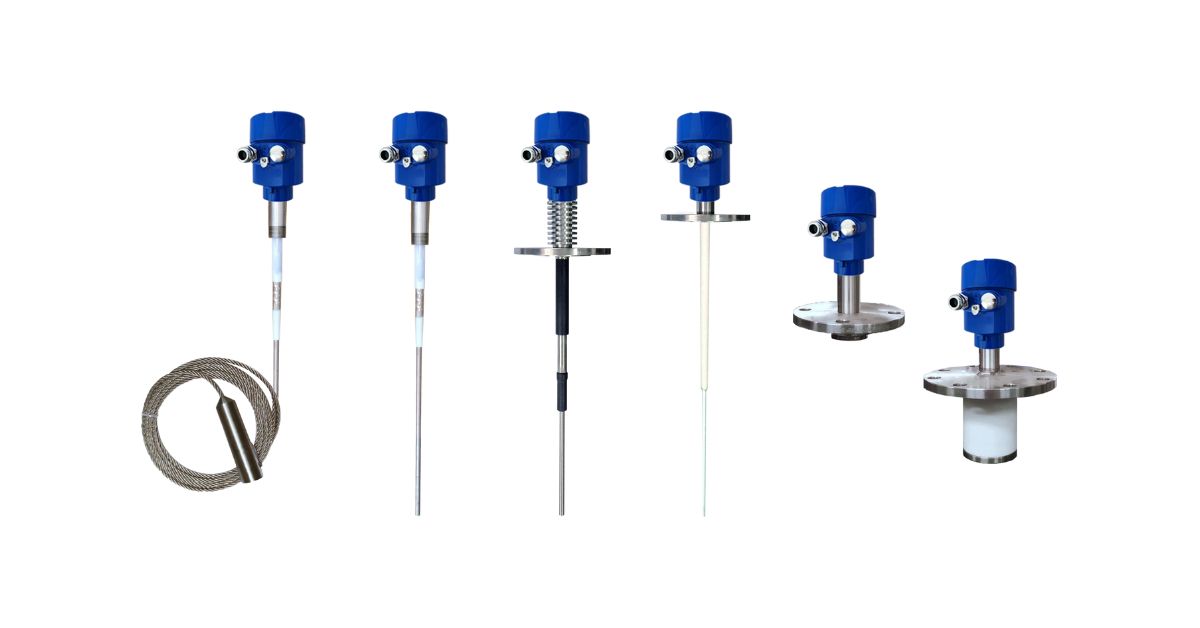
The core of RF admittance level switch is high-frequency RF signal transmission and admittance value analysis. The unit mainly consists of a sensing probe, processing circuit and signal output module. The circuit sends stable high-frequency RF signals to the probe during operation.
When the probe is not in contact with the measured medium, a fixed admittance value forms between the probe, housing and ground. The circuit identifies this empty state and outputs the corresponding signal. Once medium touches the probe, the dielectric constant of the medium changes the electric field around the probe and shifts the admittance value.
The built-in chip collects and analyzes admittance changes in real time. When the medium reaches the monitoring point, the sensor switches the output signal. The switch signal can connect alarms, conveyors or feed pumps to trigger automatic control.
💡 Key technical merit: The sensor distinguishes real medium contact signals from interference signals caused by material coating on the probe. Static adhesion will not trigger false alarms, which is the main advantage over ordinary capacitance level switches.
Compared with capacitance level switches, rotary paddle level switches and tuning fork level switches, RF admittance level switches suit more working conditions and deliver reliable performance.
| Comparison Item | RF Admittance Level Switch | Ordinary Capacitance Switch | Rotary Paddle Level Switch | Tuning Fork Level Switch |
|---|---|---|---|---|
| Anti-coating performance | Excellent, suppress false signals from medium coating | Poor, material coating easily causes misreading | Fair, material blockage leads to stop operation | Medium, viscous medium sticks to fork and affects detection |
| Mechanical wear | No moving parts, zero wear | No moving parts, zero wear | Equipped with motor and shaft, prone to wear after long operation | Vibrating structure, wear exists in long-term vibration |
| High temperature adaptability | Good, suitable for industrial high temperature conditions | Average, capacitance stability affected by high temperature | Weak, high temperature damages motor components | Medium, excessive high temperature changes vibration frequency |
| Medium compatibility | Solids, powder, liquid and slurry | Only dry, non-adhesive medium | Solid powder and particles only | Liquid and particles, not suitable for highly viscous medium |
| Maintenance cost | Low, no frequent cleaning or calibration | Relatively high, regular probe cleaning required | High, blockage and damage need frequent inspection & replacement | Medium, fork needs cleaning when sticky medium accumulates |
| Operation stability | Reliable under complex working conditions | Susceptible to environment and medium status | Affected by material impact and blockage | Stable against minor condition fluctuation |
Used for level monitoring in cement silos, fly ash silos and lime silos. It solves inaccurate measurement caused by heavy dust and wall adhesion, and provides full / empty material alarm for silos.
Suitable for grain bins and feed towers to detect pellets and powder. It resists temperature and humidity changes in warehouses to support automatic material storage and conveying.
Installed on chemical reactors and storage tanks for slurry, mildly corrosive liquid and oil level limit control. It also works for sewage tanks and sludge silos in wastewater treatment.
Applied in coal bunkers, ash silos of power plants and mineral powder hoppers in metallurgy. It monitors material level under high dust and high temperature, preventing overflow or dry running of equipment.
The sensor requires minimal maintenance. Only periodic inspection for thick caking on the probe surface is needed. The circuit module stays stable without repeated calibration under normal operating conditions.
Misconception 1: Material coating on probe will definitely trigger false alarms. Not necessarily. RF admittance technology separates static coating signals from dynamic medium contact signals. Thin stable coating will not cause false trigger. Cleaning is only required when thick caking disturbs the electric field.
Misconception 2: It can only detect solid materials. Incorrect. This sensor supports solid powder, pellets, liquids and slurries. It is a versatile point level detector for industrial measurement.
Misconception 3: It cannot work in high temperature environments. Special high-temperature RF admittance level switches are available. Compared with tuning fork and rotary paddle switches, it maintains better stability under high temperature for kilns and hot silos.
RF admittance level switches feature strong anti-interference, wide medium compatibility, zero mechanical wear and low maintenance cost. It addresses common drawbacks of traditional level switches such as false alarms and frequent breakdowns.
As an essential point level component in industrial automation systems, it serves building material, chemical, power, grain and environmental industries. It is a practical option for point level monitoring where stable measurement and low maintenance are required.
Professional OEM & ODM Manufacturer
Tailored products to meet your complex working conditions.

Shaanxi NuoYing Automation Instruments Co., Ltd.
Navigation
Navigation
Contact Us
+86 182 1004 9286
+86 182 1004 9286
+86 182 1004 9286
Block V5, Ronghao Industrial Town, Gaoling District, Xi'an, Shaanxi, China.