Sep. 16, 2026
Level switches are core components of industrial fluid and material processing systems, widely used in tank level monitoring, overflow protection, low-level alarm, and automatic feeding/stopping control across chemical, water treatment, food and beverage, pharmaceutical, petroleum, and solid material storage industries.
Capacitive level switches and float level switches are two mainstream level detection solutions in industrial scenarios. Float switches rely on mechanical buoyancy principles, featuring simple structure and low application threshold; capacitive level switches adopt solid-state electronic detection, adapting to complex working conditions such as viscous, particulate, and corrosive media.
Many engineering and maintenance teams face confusion in model selection: choosing an inappropriate level switch will lead to frequent false alarms, detection failure, accelerated component aging, and increased maintenance costs. This article comprehensively compares the two devices from working principle, core advantages, inherent limitations, technical parameters, applicable scenarios, and later maintenance, providing objective and practical selection reference for industrial users.
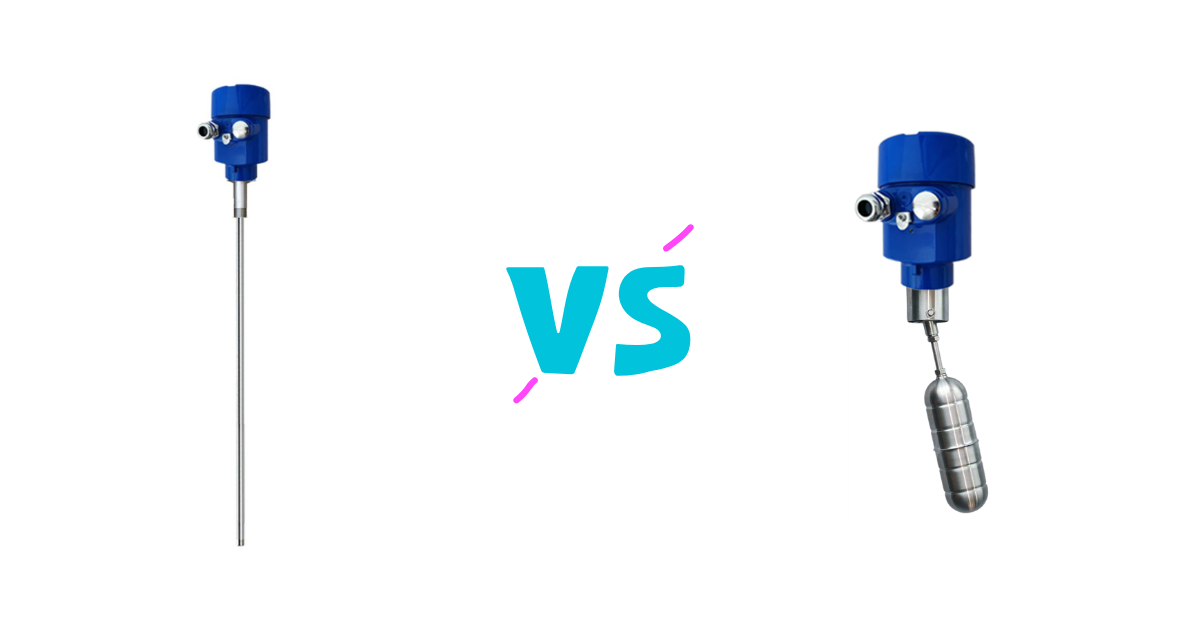
The float switch is a mechanical buoyancy detection device with a mature and simple working mechanism. It is mainly composed of a floating ball, guide rod, and built-in reed switch. The floating ball floats up and down synchronously with the rise and fall of the liquid level. When reaching the preset detection height, the magnetic component inside the floating ball triggers the reed switch inside the guide rod, completing the switch signal on-off output, so as to realize level alarm and equipment linkage control .
Most conventional industrial float switches can work without external power supply, relying entirely on mechanical structure action to output signals, with extremely low environmental adaptability restrictions in basic working conditions.
The capacitive level switch is a solid-state electronic detection device based on capacitance change induction. The probe and the metal tank wall (or reference probe) form a capacitor structure. Air and industrial media (liquid, powder, slurry) have different dielectric constants. When the medium covers the probe, the overall capacitance value changes in real time. When the capacitance difference reaches the calibrated threshold, the device outputs a switch signal to judge the material/liquid level state .
It has no mechanical moving parts, relying on electronic induction for detection, and is a non-contact or semi-contact detection method in essence, suitable for complex media scenarios that mechanical structures cannot adapt to.
The following table intuitively sorts out the differences between capacitive level switches and float switches in core technical indicators, application performance, cost and maintenance, helping users quickly screen suitable products:
|
Comparison Item |
Float Switch |
Capacitive Level Switch |
|---|---|---|
|
Detection Principle |
Mechanical buoyancy + magnetic reed switch induction |
Dielectric constant change + electronic capacitance induction |
|
Moving Parts |
Yes (floating ball, movable guide rod) |
No (fully solid-state structure) |
|
Applicable Media |
Clean water, light oil, low-viscosity and impurity-free liquids |
Liquids, slurries, powders, granular solids, corrosive and viscous media |
|
Typical Temperature Resistance |
-20℃ ~ 250℃ (depending on floating ball material) |
-40℃ ~ 200℃ (industrial standard model) |
|
Pressure Resistance Performance |
Good, suitable for conventional pressure tank environments |
Excellent, stable operation under high pressure working conditions (up to 100bar) |
|
Power Requirement |
No power supply required for basic mechanical models |
Need supporting DC/AC power supply |
|
Detection Accuracy |
General, affected by liquid turbulence and floating ball jitter |
High, stable signal, low interference sensitivity |
|
Maintenance Cycle |
Short, regular cleaning and inspection required |
Long, no wearing parts, minimal daily maintenance |
|
Initial Installation Cost |
Low, cost-effective for basic scenarios |
Medium to high, higher upfront investment |
|
Anti-Clogging Performance |
Poor, easy to jam by impurities and viscous media |
Good, not affected by slight medium adhesion |
Simple structure and high stability in basic scenarios: The mechanical structure is mature, with intuitive switching action and stable on-off signal output in clean liquid environments, and the failure rate is extremely low in standard working conditions .
Ultra-low use cost: Low equipment price, no need for complex supporting circuits and power supply systems, low installation and debugging thresholds, and very suitable for large-scale popularization in conventional water tanks and oil tanks .
Strong environmental adaptability: Not affected by liquid conductivity, and can operate stably in most conventional high temperature and pressure environments without complex calibration .
Convenient installation and replacement: Support vertical and horizontal diversified installation methods, with flexible layout and simple later replacement and maintenance operations .
Mechanical wear and aging risk: There are movable parts, and long-term reciprocating floating will cause wear and fatigue of components, leading to jitter or failure of switch action after long-term operation .
Poor adaptability to complex media: Viscous liquids, slurry, and media with solid impurities are easy to adhere to or block the floating ball, resulting in floating failure and false level detection .
Affected by liquid turbulence: Severe liquid fluctuation will cause floating ball jitter, trigger frequent signal switching, and affect the stability of the control system .
Limited detection accuracy: It can only realize single-point limit alarm, and cannot achieve high-precision fine level monitoring, with single functional scenario .
No mechanical wearing parts, long service life: Fully solid-state electronic design, no movable components, no wear and jitter problems, stable long-term operation, and greatly reduced later maintenance frequency .
Wide medium adaptability: It can detect conductive and non-conductive liquids, as well as powder, granular materials, slurry and other solid-liquid mixed media, covering almost all industrial conventional materials .
Strong anti-interference and high accuracy: The electronic induction signal is stable, not easily affected by medium turbulence, and supports high-precision single-point limit detection, which can meet the control requirements of high-precision processes .
Adapt to harsh working conditions: It can operate stably in high pressure, high temperature, corrosive and easily crystallized media, and some models with active shielding technology can ignore slight probe adhesion interference .
Need professional calibration: Different media have different dielectric constants. After replacing the detection medium or changing the working condition parameters, recalibration is required to ensure detection accuracy .
Higher upfront cost: Compared with float switches, the equipment and debugging costs are higher, with a higher threshold for small-batch and simple scenario applications .
Sensitive to heavy adhesion: Long-term accumulation of thick sticky materials on the probe surface will affect capacitance induction and cause detection deviation .
Dependent on power supply: Normal operation requires a stable power supply, which increases the configuration cost of the on-site electrical system compared with passive mechanical switches.
Focus on low cost, simple working conditions and low maintenance demand
Water treatment industry: Domestic water tanks, sewage sedimentation tanks, clean water pool level alarm and water pump linkage control.
Petroleum and light industry: Clean fuel oil, hydraulic oil and other low-viscosity liquid storage tank level monitoring.
Civil and conventional industrial supporting: Simple tank overflow protection, low-level material shortage alarm, and low-precision automatic liquid supply system.
Working condition characteristics: Clean medium, no obvious impurities and viscosity, stable liquid level fluctuation, and sufficient later inspection and maintenance conditions.
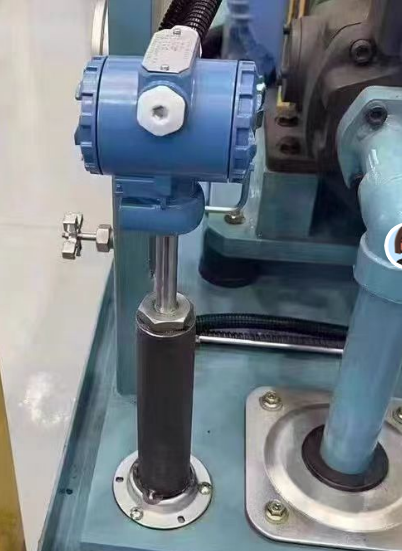
Focus on high stability, complex media and long-term unattended operation
Chemical industry: Corrosive liquids, chemical slurry, viscous solvent medium level detection.
Food and pharmaceutical industry: Powder raw materials, granular materials, high-viscosity syrup and emulsion level monitoring.
New energy and building materials: Cement powder, battery slurry, granular raw material silo material level limit alarm.
Harsh working condition sites: High-pressure sealed tanks, high-temperature reaction kettles, and unattended automated production lines that require long-term stable operation.
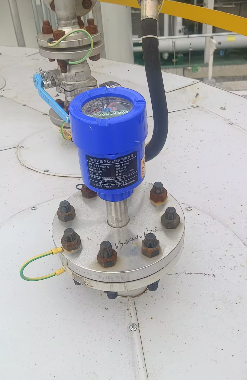
In actual industrial selection, there is no absolute superior product. Users need to match the equipment according to on-site working conditions, and the core selection logic is sorted out as follows:
1. Medium priority principle: For clean, low-viscosity and impurity-free liquids, float switches can be preferentially selected to control costs; for viscous, particulate, corrosive, solid powder and other complex media, capacitive level switches must be selected to avoid mechanical blockage failure.
2. Operation and maintenance cost balance: Short-term use, frequent equipment replacement and simple scenarios are suitable for float switches; long-term continuous operation, unattended sites and scenarios requiring low maintenance frequency are suitable for capacitive level switches.
3. Precision and stability requirements: Ordinary overflow and material shortage alarm with low precision requirements can use float switches; automated production linkage, high-precision liquid level control and anti-jitter scenarios need to use capacitive level switches.
4. Working condition parameter matching: For high temperature, high pressure and sealed tank environments, give priority to capacitive level switches with strong environmental adaptability; for normal temperature and pressure open tanks, float switches can meet the demand.
Float switches and capacitive level switches occupy important positions in industrial level detection systems with their respective characteristics. Float switches rely on simple mechanics, low cost and convenient use, and are the optimal choice for conventional clean medium and low-precision monitoring scenarios; capacitive level switches rely on solid-state structure, wide medium adaptability and high stability, and solve various detection pain points of complex industrial working conditions.
Engineering users should not blindly pursue high-end equipment or overly low-cost configuration. Combining on-site medium characteristics, working condition parameters, precision requirements and later operation and maintenance conditions to select matching level switches can effectively reduce failure rate, extend equipment service life and optimize overall industrial control costs.
Professional OEM & ODM Manufacturer
Tailored products to meet your complex working conditions.

Shaanxi NuoYing Automation Instruments Co., Ltd.
Navigation
Navigation
Contact Us
+86 182 1004 9286
+86 182 1004 9286
+86 182 1004 9286
Block V5, Ronghao Industrial Town, Gaoling District, Xi'an, Shaanxi, China.